Wondering how high a light switch should be installed? Here’s the standard light switch height used in most homes, why it matters, and when electricians may install switches higher or lower.

Quick Answer
Standard Light Switch Height
Why Switches Are Usually 48 Inches High
When Switch Heights Vary
ADA & Accessibility Considerations
How This Relates to Outlet Heights
Installation & Remodeling Tips
FAQs
Have you ever noticed that light switches seem to be installed at nearly the same height in most homes?
That consistency is intentional.
Builders, electricians, and contractors generally follow long-established industry standards that make switches:
- Comfortable to reach
- Visually consistent
- Easy to locate
- Practical for most users
Although switch height is not rigidly fixed by the National Electrical Code (NEC) for standard residential construction, most electricians follow common industry practices unless accessibility requirements or design needs call for something different.

Related articles:
How to Replace an Electrical Outlet
How to Replace a Light Switch
How Home Electrical Systems Work
Quick Answer
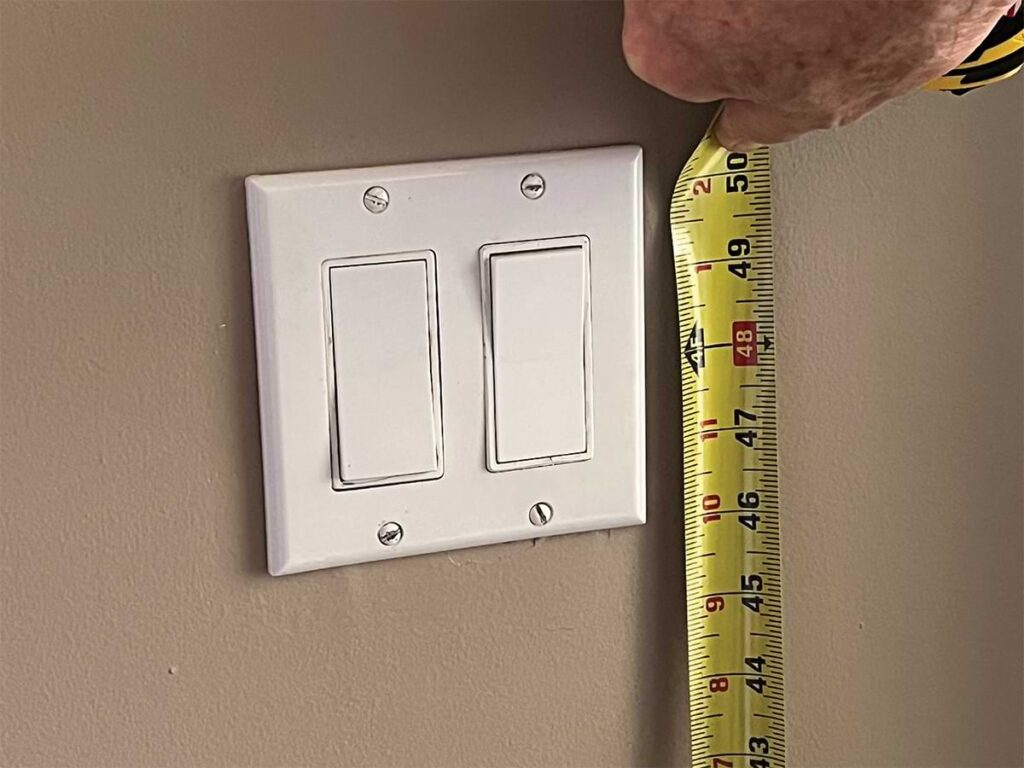
The standard height for a wall light switch is:
- 48 inches from the finished floor to the center of the switch box or switch
This height is widely used because it is comfortable and accessible for most adults while maintaining consistency throughout the home.

Don’s Advice
One of the easiest ways to make a remodeling project feel professionally built is maintaining consistent switch and outlet heights throughout the house.
Even small variations become surprisingly noticeable once trim, cabinets, and paint are finished.
Standard Light Switch Height
In most residential construction, electricians position standard wall switches so the center of the switch sits approximately:
- 48 inches above the finished floor
“Finished floor” means the final flooring surface, including:
- Hardwood
- Tile
- Carpet
- Laminate
- Vinyl flooring
Electricians typically measure to:
- The center of the electrical box
- Or the center of the installed switch
This height has become the informal industry standard for residential work across much of the United States.
Why Switch Height Matters
Consistent switch height helps:
- Create visual uniformity
- Improve usability
- Simplify installation
- Align switch plates cleanly with trim and cabinetry
- Make switches easier to locate in the dark
Consistency becomes especially important in hallways and rooms where multiple switches are visible together.
Why Switches Are Usually 48 Inches High
The 48-inch standard evolved largely because it works comfortably for most adults.
At this height, switches are generally:
- Easy to reach without bending
- Accessible without stretching
- Comfortable for standing users
- Convenient near doorways
The height also keeps switches above many furniture surfaces and away from accidental bumps.
Builders and electricians prefer standardization because it speeds installation and creates a cleaner finished appearance.
Don’s Advice
Switches are usually installed at a consistent height throughout a house because inconsistent switch placement tends to stand out visually once the home is finished and furnished.
This is especially noticeable in hallways where multiple switch plates line up together.
When Light Switch Heights Vary
Although 48 inches is common, there are situations where electricians intentionally install switches higher or lower.
Children’s Rooms
Switches in children’s spaces are sometimes installed lower—often around:
- 36 to 42 inches
to make them easier for kids to reach independently.
Accessibility Needs
Homes designed for wheelchair accessibility or mobility limitations may use lower switch heights.
Other accessible features may include:
- Large rocker switches
- Smart controls
- Touch-sensitive switches
- Voice-controlled lighting
Kitchen & Bathroom Considerations
Switch locations may shift slightly because of:
- Backsplashes
- Countertops
- Cabinet placement
- Mirror layouts
In kitchens, switches are often positioned to align neatly with upper cabinets and backsplash layouts.
Custom Architectural Design
Some architects intentionally vary switch height for aesthetic reasons, especially in:
- Contemporary homes
- Luxury homes
- Historic restorations
- Minimalist interiors
However, consistency within each area is still important.
ADA & Accessibility Considerations
In homes or buildings designed for accessibility, switch placement may need to comply with:
- ADA guidelines
- Local accessibility codes
- Universal design standards
Although requirements vary, accessible switch heights are commonly installed lower than standard residential heights.
Reach range requirements may also affect placement when:
- Countertops obstruct access
- Cabinets project outward
- Wheelchair access is required
For exact requirements, always consult:
- Local building officials
- Accessibility guidelines
- A licensed electrician
How This Relates to Outlet Heights
Standard electrical outlet heights are much lower than switch heights.
Most receptacles are installed with the box positioned approximately:
- 12 to 16 inches above the finished floor
However, outlet heights often vary more than switch heights because of:
- Furniture placement
- Kitchen countertops
- Bathroom vanities
- Workbenches
- Home office setups
See also:
How to Replace an Electrical Outlet
How GFCI Outlets Work
Installation & Remodeling Tips
Measure From the Finished Floor
Always measure switch height from the final flooring surface—not from the subfloor during framing.
This prevents switch plates from ending up uneven after flooring installation.
Keep Heights Consistent
During remodeling, try to maintain existing switch heights whenever possible.
Consistency helps the room feel professionally finished.
Plan Around Cabinets & Trim
Before rough wiring begins, verify:
- Cabinet locations
- Backsplash heights
- Trim details
- Furniture placement
This avoids awkward switch placement later.
Consider Future Accessibility
If aging-in-place or long-term accessibility is important, lower switch placement and larger switch styles may be worth considering during remodeling.
Need Professional Help?
If you are remodeling, rewiring, or adding switches during a renovation, a licensed electrician can ensure proper switch placement, code compliance, and safe installation.
Find a trusted local electrician for electrical upgrades and switch installation.
FAQs
What is the standard light switch height?
The standard residential height is typically 48 inches from the finished floor to the center of the switch.
Is light switch height required by code?
The NEC does not specify a strict standard residential switch height, though accessibility rules may apply in some situations.
Can switches be installed lower?
Yes. Lower switch heights are common in accessible homes and children’s spaces.
Should all switches be the same height?
In most homes, consistent switch height creates the cleanest appearance and easiest usability.
What is the standard outlet height?
Most outlets are installed roughly 12 to 16 inches above the finished floor.