
A GFCI outlet (ground-fault circuit interrupter) is a special electrical receptacle that protects you from electrical shock by shutting off power when it detects a problem.

Quick Answer
Common GFCI Problems
What Is a GFCI Outlet?
How It Works
Why It Trips
Where GFCIs Are Required
Do GFCI Requirements Apply to Existing Homes?
Test & Reset Buttons
GFCI vs Regular Outlet
You’ll find GFCI outlets in bathrooms, kitchens, garages, and outdoor locations—anywhere electricity and water may come into contact. These outlets are designed to react instantly to dangerous conditions and can prevent serious injury or electrocution.
Always turn off power at the circuit breaker before inspecting or working on any electrical wires that connect the outlet. Use a voltage tester to confirm the outlet is not live.
Quick Answer
A GFCI outlet monitors the flow of electricity and shuts off power in a fraction of a second if it detects a ground fault—meaning electricity is flowing where it shouldn’t, such as through water or a person.
Common GFCI Problems
Many homeowners encounter issues with GFCI outlets. These problems are often easy to diagnose and fix.
- Outlet won’t reset
- Keeps tripping
- No power but breaker is fine
See GFCI Outlet Keeps Tripping
What Is a GFCI Outlet?
A GFCI (ground-fault circuit interrupter) outlet looks similar to a standard electrical outlet but includes built-in safety features designed to protect people from electrical shock.
These outlets have two buttons:
- TEST
- RESET
Unlike a standard outlet, a GFCI is designed to shut off power instantly if it detects even a small electrical imbalance.

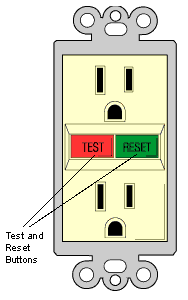
A GFCI outlet includes TEST and RESET buttons for safety control. ©HomeTips
For a broader explanation, see How Electrical Receptacles Work.
How a GFCI Outlet Works
A GFCI constantly monitors the flow of electricity between the hot and neutral wires to detect unsafe conditions.
Under normal operation:
- Electricity flows out on the hot (black) wire
- Returns on the neutral (white) wire
If even a small amount of current is lost—such as through water or a person—the GFCI detects the imbalance and shuts off the circuit almost instantly.
This rapid shutoff helps prevent serious injury.
Why a GFCI Outlet Trips
A GFCI outlet shuts off power when it detects a potential hazard. This is a safety feature, not a malfunction.
Common causes include:
- Moisture or water contacting the outlet
- Faulty appliances
- Damaged cords
- Ground faults in wiring
For troubleshooting, see GFCI Outlet Keeps Tripping.
Where GFCI Outlets Are Required
Building codes require GFCI protection in areas where water is present and the risk of electrical shock is higher.
- Bathrooms
- Kitchens (near sinks)
- Garages
- Outdoor outlets
- Basements
These locations present a higher risk of electrical shock.
Do GFCI Requirements Apply to Existing Homes?
GFCI requirements are based on modern codes but typically apply only when electrical work is performed.
In most cases:
- You are not required to upgrade existing outlets
- Older homes may legally have non-GFCI outlets
However, GFCI protection is required when:
- You replace an outlet
- You install a new outlet or circuit
- You remodel kitchens, bathrooms, or similar areas
Pro Tip: Installing a GFCI at the first outlet in a circuit can protect downstream outlets.
Test and Reset Buttons
GFCI outlets include built-in buttons to test and restore power.
To test:
- Press TEST
- Power should shut off
To reset:
- Press RESET
- Power should return
Test periodically to ensure proper operation.
GFCI Outlet vs Regular Outlet
A GFCI outlet provides an added layer of safety compared to a standard outlet.
| Feature | Regular Outlet | GFCI Outlet |
|---|---|---|
| Shock protection | No | Yes |
| Test/reset buttons | No | Yes |
| Required in wet areas | No | Yes |
A standard outlet provides power. A GFCI outlet adds critical protection.
FAQs: GFCI Outlets
What does GFCI stand for?
Ground-Fault Circuit Interrupter.
Why does my GFCI keep tripping?
It may be detecting moisture, a faulty appliance, or a wiring issue.
Do all outlets need to be GFCI?
No, only in specific locations such as kitchens, bathrooms, and outdoors.
Can a GFCI protect other outlets?
Yes, downstream outlets can be protected.
For more help, see Outlet Not Working? How to Troubleshoot & Fix It.
Next See:
- GFCI Outlet Not Working
- GFCI Outlet Keeps Tripping
- Outlet Has No Power But Breaker Not Tripped
- How Electrical Receptacles Work
To Hire an Electrician…
If the job becomes complicated, find a qualified electrician.