A rattling door usually means the door no longer fits tightly against the stop molding or strike plate. In many cases, a simple adjustment to the strike plate, latch, or weatherstripping will eliminate the noise and improve the fit.

Quick Answer
Why Doors Start Rattling
How to Diagnose the Problem
Adjust the Strike Plate
Bend the Strike Plate Tab
Adjust the Door Stop
Add or Replace Weatherstripping
Check Loose Hinges
Exterior Door Rattles
FAQs
Door rattles are especially common when:
- Windows are open
- HVAC systems cycle on
- People walk heavily nearby
- Exterior winds create pressure changes
Sometimes the noise is minor but annoying.
Other times, the rattling indicates that the latch, hinges, or frame no longer fit together properly.
Fortunately, most rattling doors can be corrected with small adjustments rather than major repairs.
Quick Answer
Most rattling doors are caused by:
- A loose latch fit inside the strike plate
- Loose stop molding
- Worn weatherstripping
- Minor hinge movement
- Seasonal wood shrinkage
Often, carefully bending the strike plate tab inward slightly solves the problem in just a few minutes.

Don’s Advice
The simplest rattling-door fixes are often the best.
I’ve seen homeowners replace hardware unnecessarily when all the door really needed was a slight adjustment to the strike plate tab.
Why Doors Start Rattling
Doors are designed to fit snugly against:
- The strike plate
- The stop molding
- The weatherstripping
Over time:
- Wood shrinks slightly
- Hinges loosen
- Weatherstripping compresses
- Strike plates wear
- Frames shift subtly
These small changes create tiny gaps that allow the door to move or vibrate.
Interior doors commonly rattle because of:
- Loose latch fit
- Seasonal shrinkage
- Air pressure changes
Exterior doors may also rattle because worn weatherstripping no longer cushions the door tightly.
How to Diagnose a Rattling Door
Close the door fully and push gently against it.
Observe whether:
- The latch feels loose inside the strike plate
- The door moves against the stop molding
- The hinges shift slightly
- The weatherstripping feels compressed or missing
You may also hear different types of noise:
- A metallic click from the latch
- A wood tapping sound against the stop
- A vibration during wind or HVAC operation
These clues help identify the source of the movement.
| Symptom | Likely Cause |
|---|---|
| Metallic clicking sound | Loose latch fit |
| Door moves when pushed | Loose strike plate fit |
| Rattles during wind | Compressed weatherstripping |
| Door shifts at hinges | Loose hinge screws |
| Rattle worse in winter | Seasonal wood shrinkage |
Check the Strike Plate First
The strike plate is the metal plate attached to the jamb where the latch engages.
Most rattling originates here.


Inspect the strike plate for:
- Loose screws
- Wear marks
- A latch fit that feels sloppy
First try tightening the screws firmly.
Sometimes this alone removes enough movement to stop the noise.
See also:
How to Fix a Door That Won’t Latch
How to Bend the Strike Plate Tab
Most strike plates contain a small flexible metal tab inside the opening.
This tab helps hold the latch snugly when the door closes.
Over time, the tab may flatten slightly, allowing the door to rattle.
1. Open the Door
Use a flashlight if necessary to see the tab clearly inside the strike opening.
2. Bend the Tab Inward Slightly
Use needle-nose pliers carefully.
Bend the tab only a small amount at a time.
3. Test the Door Frequently
Close the door and check the fit after each adjustment.
If bent too aggressively:
- The latch may become hard to close
- The door may require slamming
Small adjustments work best.
Don’s Advice
If the latch suddenly becomes difficult to close after adjusting the tab, you’ve probably bent it too far.
Back it off slightly rather than forcing the latch harder against the strike plate.
Adjust the Door Stop Molding
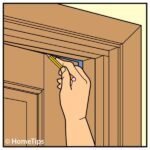
The door stop is the narrow strip of molding the door closes against.
If the stop loosens or shifts slightly, the door may no longer fit tightly.
1. Check for Movement
With the door closed:
- Press gently against the slab
- Look for movement between the door and stop
2. Reposition the Stop Slightly
If necessary:
- Score paint seams with a utility knife
- Tap the stop inward slightly using a wood block and hammer
- Renail it securely
Make very small adjustments and test the fit often.
Replace Worn Weatherstripping
Exterior doors rely on weatherstripping both for sealing and cushioning.
When weatherstripping compresses or deteriorates:
- The door may rattle during wind
- Drafts may appear
- The latch fit may feel looser
Inspect weatherstripping for:
- Flattened areas
- Cracks
- Missing sections
- Hardened material
Replacing worn weatherstripping often improves both noise and energy efficiency.
Check for Loose Hinges
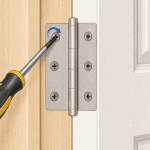
Loose hinges can contribute to rattling by allowing slight door movement.
Inspect all hinge screws carefully.
Look for:
- Screws backing out
- Movement at the hinge leaves
- Uneven door gaps
Tighten loose screws firmly.
If necessary:
- Repair stripped screw holes
- Install longer hinge screws
See:
How to Fix a Sagging Door
Exterior Doors Often Need Tighter Fits
Exterior doors are designed to seal more tightly than interior doors.
If an exterior door rattles:
- Check weatherstripping carefully
- Inspect the threshold fit
- Look for warped areas
- Verify the latch engages fully
Even small gaps can allow:
- Drafts
- Water intrusion
- Noise transfer
- Energy loss
FAQs
Why does my door rattle when the furnace turns on?
Pressure changes from HVAC airflow can vibrate a loosely fitting door against the strike plate or stop molding.
What is the easiest way to stop a rattling door?
Usually bending the strike plate tab inward slightly provides a tighter latch fit.
Can loose hinges cause a door to rattle?
Yes. Even small amounts of hinge movement can allow the door to vibrate inside the frame.
Why does my exterior door rattle in the wind?
Worn weatherstripping or a loose latch fit often allows slight movement during pressure changes.
Should a door fit tightly against the stop?
Yes, but not so tightly that the latch becomes difficult to engage.
Need Professional Help?
If the door frame has shifted significantly or the door no longer seals properly, a carpenter or door specialist can diagnose the underlying alignment problem.