Wondering how a central air conditioner works? This expert guide explains how an AC system cools your house by moving heat outdoors using refrigerant, coils, a compressor, and ductwork.

Quick Answer
The Basic Cooling Process
Main AC Components
How Refrigerant Cools Air
How Air Moves Through the House
Efficiency & Energy Use
Common AC Problems
FAQs
Central air conditioning works by removing heat from indoor air and releasing it outdoors. Although people think of an air conditioner as “making cold air,” what it actually does is transfer heat from inside the house to outside.
The system uses refrigerant, a compressor, coils, and fans to absorb heat indoors, carry it outside, and then circulate cooled air back through the home.
Most central AC systems share ductwork with a forced-air furnace, using the same blower and air distribution system during both heating and cooling seasons.


Quick Answer
A central air conditioner cools a house by circulating refrigerant between an indoor evaporator coil and an outdoor condenser unit. The refrigerant absorbs heat indoors, carries it outside, releases it there, and then repeats the cycle while a blower distributes cooled air through the home’s ductwork.

Don’s Advice
One of the easiest ways to understand central air conditioning is to think of it as a heat-moving system rather than a cold-making machine.
The AC removes heat and humidity from indoor air, carries that heat outdoors through refrigerant lines, and then circulates the cooled air back through the house.
The Basic Cooling Process
When the thermostat senses that indoor temperatures have risen above the set point, it signals the air-conditioning system to begin cooling.
Several things then happen almost simultaneously:
- The indoor blower turns on
- Warm indoor air is pulled through return ducts
- The air passes through the air filter
- The air moves across the cold evaporator coil
- Heat and humidity are removed from the air
- The cooled air is pushed back into the house through supply ducts
Meanwhile, refrigerant carries the absorbed heat outdoors, where the condenser unit releases it into outside air.
Main Parts of a Central Air Conditioner
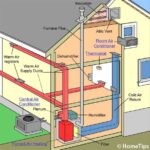
A standard split-system central air conditioner has several major components that work together.
Indoor Evaporator Coil
The evaporator coil is mounted inside or above the furnace or air handler. This coil becomes very cold as refrigerant passes through it.
As warm household air blows across the coil:
- Heat transfers into the refrigerant
- Humidity condenses out of the air
- The air becomes cooler and drier
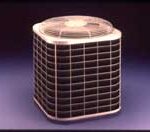
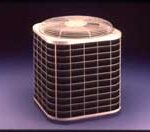
Outdoor Condenser Unit
The outdoor unit contains:
- The compressor
- The condenser coil
- A large fan
This unit releases collected indoor heat outdoors.
Compressor
The compressor is often described as the “heart” of the air-conditioning system because it pumps refrigerant through the system and raises its pressure and temperature.
Without the compressor, refrigerant cannot circulate properly.
Refrigerant Lines
Insulated copper tubing connects the indoor and outdoor units. Refrigerant travels through these lines continuously during operation.
Thermostat
The thermostat monitors room temperature and controls when the system turns on and off.

How Refrigerant Cools the Air
The refrigerant cycle is what allows the air conditioner to move heat from indoors to outdoors.
Here’s how the cycle works:
1. Refrigerant Enters the Indoor Coil
The refrigerant enters the evaporator coil as a cold, low-pressure liquid.
2. Indoor Heat Transfers into the Refrigerant
As warm air blows across the coil, the refrigerant absorbs heat and begins changing from a liquid into a vapor.
3. Refrigerant Travels Outdoors
The refrigerant vapor moves to the outdoor compressor through refrigerant lines.
4. The Compressor Raises Pressure & Temperature
The compressor pressurizes the refrigerant, making it very hot.
5. Outdoor Coil Releases Heat
The condenser fan blows outdoor air across the condenser coil, allowing the refrigerant to release heat outdoors.
6. Refrigerant Cools & Repeats the Cycle
The refrigerant cools, returns to a liquid state, passes through an expansion device, and returns indoors to repeat the process.
Don’s Advice
Many homeowners are surprised to learn that an air conditioner also removes a significant amount of humidity from indoor air.
That dehumidifying effect is one reason properly functioning AC systems make homes feel more comfortable even when temperatures don’t change dramatically.
How Air Moves Through the House
Airflow is just as important as refrigeration.
The blower inside the air handler or furnace continuously circulates air through:
- Return-air ducts
- The filter
- The evaporator coil
- Supply ducts
- Room registers
Restricted airflow can reduce cooling performance dramatically.
Common airflow problems include:
- Dirty air filters
- Blocked vents
- Collapsed ductwork
- Dirty evaporator coils
- Weak blower motors
See:
Why a Central AC Isn’t Cooling
Efficiency & Energy Use
Central air conditioners use a considerable amount of electricity during hot weather, so efficiency matters.
Newer systems are rated using SEER2 (Seasonal Energy Efficiency Ratio), which measures cooling efficiency over an entire season.
Efficiency depends on:
- Proper system sizing
- Duct condition
- Insulation levels
- Outdoor temperatures
- Airflow
- Refrigerant charge
- Equipment maintenance
A system that is too large may short-cycle and fail to dehumidify properly. A system that is too small may run constantly and still struggle to cool the house.
See:
Sizing a Central Air Conditioner
Also see:
How Much Does Central Air Conditioning Cost?
Common AC Problems
When a central air conditioner stops working properly, symptoms often point toward specific parts of the cooling cycle.
- Warm air from vents: Refrigerant, compressor, airflow, or thermostat problems
- Weak airflow: Dirty filter, blower issue, or duct restriction
- Ice on the coil: Airflow or refrigerant problems
- Outdoor unit won’t run: Electrical, capacitor, or thermostat issue
- System runs constantly: Dirty coils, undersized unit, heat gain, or refrigerant problems
- High humidity indoors: Oversized system, airflow issues, or improper operation
Related troubleshooting articles:
- Central AC Not Cooling
- AC Not Turning On
- Why an AC Runs Constantly
- Why an AC Won’t Reach Temperature
- AC Noise Troubleshooting
- What AC Smells Mean
- Why the AC Fan Isn’t Working
Video: How a Central Air Conditioner Works
Need Professional Help?
If your AC problem involves electrical components, refrigerant, or repairs you’re not comfortable handling, it’s best to call a qualified HVAC technician.
Find a trusted local heating & air conditioning contractor to diagnose and repair the system safely.
FAQs
Does a central air conditioner create cold air?
Not exactly. It removes heat from indoor air and transfers that heat outdoors.
Why does an AC also reduce humidity?
As warm air passes over the cold evaporator coil, moisture condenses out of the air just like water droplets forming on a cold glass.
What is the difference between the evaporator and condenser?
The evaporator absorbs indoor heat. The condenser releases that heat outdoors.
Can dirty filters reduce cooling?
Yes. Restricted airflow can reduce efficiency, lower comfort, and even cause the evaporator coil to freeze.
Why does my outdoor AC unit get hot?
The outdoor condenser unit releases heat collected from inside the house, so it normally becomes warm during operation.