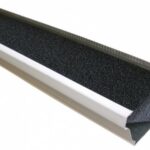

Gutter guards and leaf catchers help prevent clogged, overflowing gutters by blocking leaves, pine needles, and roof debris while allowing rainwater to flow into the gutters.
In This Article:
Quick Answer
Types of Gutter Guards
Fine-Mesh & Micro-Mesh Gutter Guards
Solid-Top Gutter Covers
Foam & Brush Gutter Inserts
Choosing the Best Gutter Guard
How Much Gutter Guards Cost
FAQs
Rain gutters need regular cleaning to prevent leaves and debris from clogging downspouts and causing water to overflow against siding, windows, doors, and foundations.
Gutter guards are designed to reduce maintenance by keeping debris out while still allowing water to drain properly.
But not all gutter guards perform equally well.
Some systems work exceptionally well beneath broadleaf trees but struggle with pine needles. Others handle moderate rainfall well but allow water to overshoot the gutter during heavy downpours or on steep roofs.
The best gutter guard for your home depends on:
- The types of trees around the house
- Your roof pitch
- Your roof material
- Your climate
- Your maintenance expectations
- Your budget
Quick Answer
Fine-mesh gutter guards generally offer the best overall balance of debris protection and water flow, though they are among the most expensive options. Foam inserts and brush inserts are inexpensive and DIY-friendly but usually require more maintenance. Solid-top reverse-curve systems can work very well in some situations but may struggle on steep roofs or during heavy rainfall.

Don’s Advice
One of the biggest misconceptions about gutter guards is that they completely eliminate gutter maintenance.
Even the best systems still need occasional inspection—especially after storms, beneath heavy tree cover, or where roof valleys dump large amounts of water and debris into the gutters.
Types of Gutter Guards
Most gutter protection systems fall into three basic categories:
- Fine-mesh or micro-mesh screens
- Solid-top reverse-curve covers
- Foam or brush inserts
Each type has strengths and weaknesses.
Prices range from inexpensive DIY inserts costing just a few dollars per foot to professionally installed systems costing $20 to $35 or more per linear foot.
Fine-Mesh & Micro-Mesh Gutter Guards
Fine-mesh gutter guards are among the most effective systems currently available.
These systems use extremely small openings in stainless-steel mesh or similar materials to allow rainwater through while blocking:
- Leaves
- Pine needles
- Roof grit
- Seeds
- Small debris
Because of their filtration ability, micro-mesh systems are also popular for rainwater collection systems.
Compared to cheaper screen guards sold at home centers, professional micro-mesh systems are usually:
- More durable
- Far more effective
- Better at handling small debris
- Longer-lasting
However, they are also significantly more expensive.
Don’s Advice
Very fine micro-mesh systems can occasionally clog when installed beneath older asphalt roofs that shed heavy amounts of grit or tar particles.
Homes surrounded by pine trees, moss, or heavy pollen may also require occasional surface cleaning.
Popular Micro-Mesh Gutter Guard Brands
Several well-known companies specialize in fine-mesh gutter systems.
LeafFilter


LeafFilter remains one of the best-known professionally installed micro-mesh systems. It uses stainless-steel mesh over a structural support frame designed to keep debris out while maintaining water flow.
LeafFilter is generally considered one of the top-performing systems for filtering small debris.
Typical professionally installed pricing today often ranges roughly from:
- $20 to $35+ per linear foot
depending on roof complexity and region.
Gutterglove

Gutterglove continues to offer several versions of aluminum-framed stainless-steel mesh gutter guards.
The company also offers systems designed for snowy climates and ice-prone regions.
Some versions are available for skilled DIY installation, though professional installation is more common.
MasterShield

MasterShield remains a respected high-end micro-mesh system that uses a ribbed support design intended to improve strength and water capture.
These systems are generally professionally installed and priced similarly to other premium micro-mesh products.
Solid-Top Reverse-Curve Gutter Covers
Solid-top gutter covers use surface tension to direct water into the gutter while allowing leaves and debris to fall off the edge.

These systems are among the most heavily marketed gutter guard products.
Advantages include:
- Excellent large-leaf rejection
- Long service life
- Minimal visible debris buildup
However, they also have potential drawbacks.
Potential Problems with Solid-Top Systems
Performance can vary depending on:
- Roof pitch
- Roof material
- Rainfall intensity
- Snow and ice conditions
- Roof valleys
On steep roofs or metal roofs, fast-moving water may overshoot the gutter entirely during heavy rain.
Some systems can also contribute to:
- Large icicles
- Ice dams
- Snow buildup along eaves
These systems are typically professionally installed and among the most expensive gutter guard options.

Foam & Brush Gutter Inserts
Foam and brush-style gutter guards are among the easiest and least expensive options for homeowners who want a DIY solution.
Brush Gutter Guards

Brush inserts resemble oversized bottle brushes that sit inside the gutter.
They allow water through while helping prevent leaves from fully clogging the gutter.
Advantages include:
- Very easy DIY installation
- Low cost
- No fasteners required
- Minimal tools needed
But they still require periodic cleaning because debris can become trapped in the bristles.
GutterBrush remains one of the best-known brush systems.
Foam Gutter Inserts

Foam inserts fit directly into the gutter and allow water to soak through while blocking larger debris.
Advantages include:
- Simple installation
- Low cost
- No roof penetration
- Good leaf blocking
Potential drawbacks include:
- Reduced water flow during heavy rain
- Debris accumulation on top
- Possible deterioration over time
- Mold or algae growth in damp climates
Higher-quality foam products typically last much longer than inexpensive versions.
How to Choose the Best Gutter Guard
The best gutter guard depends heavily on your specific conditions.
| Situation | Best Option |
|---|---|
| Heavy pine needles | Micro-mesh systems |
| DIY installation | Brush or foam inserts |
| Heavy rain | High-flow micro-mesh |
| Steep metal roof | Avoid some reverse-curve systems |
| Snow & ice climate | Micro-mesh or specialized systems |
| Lowest upfront cost | Brush or foam inserts |
Before committing to an expensive professionally installed system, ask for references from homeowners with:
- Similar roof types
- Similar tree conditions
- Similar climate
Performance can vary dramatically depending on local conditions.
How Much Gutter Guards Cost
Current typical installed costs generally fall within these ranges:
- Basic DIY screens: under $2 per foot
- Brush or foam inserts: about $3–$8 per foot
- Micro-mesh systems: roughly $20–$35+ per foot installed
- Premium reverse-curve systems: roughly $20–$35+ per foot installed
Factors affecting price include:
- Roof height
- Roof pitch
- Linear footage
- Gutter condition
- Regional labor costs
- Complex rooflines
Need Professional Help?
Professional gutter installers can evaluate your roof type, drainage conditions, and surrounding trees to recommend the best gutter protection system for your home.
Find a trusted local gutter contractor for estimates and installation.
FAQs
Do gutter guards eliminate gutter cleaning completely?
No. Most gutter guards reduce maintenance substantially but still require occasional inspection and cleaning.
What type of gutter guard works best for pine needles?
Fine-mesh or micro-mesh systems usually perform best against pine needles and small debris.
Are expensive gutter guards worth it?
For heavily wooded homes or difficult-to-access roofs, premium systems can significantly reduce maintenance and improve water management.
Can gutter guards handle heavy rain?
Some perform much better than others. Roof pitch and roof material can strongly affect performance.
Can gutter guards cause ice dams?
Some solid-top systems may contribute to icicle or ice-dam formation in snowy climates.