Expert basement kitchen design ideas for solving common basement issues such as low ceilings, poor lighting, limited space, moisture problems, and awkward layouts.

Quick Answer
Plan the Ideal Basement Kitchen
Create an Open Feel
Use Space Efficiently
Solve Basement Lighting Challenges
Prevent Moisture Problems
Ventilation & Air Quality
Basement Kitchen Costs
FAQs
Turning a basement into livable space is one of the most practical ways to add value and flexibility to a home. Whether the goal is a guest suite, rental unit, entertaining area, or multigenerational living space, adding a basement kitchen can dramatically improve functionality.
But basement kitchens come with unique design challenges that standard kitchen remodels don’t face. Low ceilings, limited natural light, exposed ductwork, moisture concerns, and tight floorplans all require careful planning.
The good news is that smart design strategies can transform even a dark or awkward basement into a bright, inviting kitchen space that feels fully integrated with the rest of the home.
Before building a basement kitchen, check local building codes and permitting requirements. Some jurisdictions restrict full kitchens in basements unless the space qualifies as a legal dwelling unit.
Quick Answer
The best basement kitchens maximize light, minimize visual clutter, control moisture carefully, and use space-efficient layouts and cabinetry. Light colors, layered lighting, custom storage, and moisture-resistant materials are especially important in below-grade spaces.

Don’s Advice
One of the biggest mistakes homeowners make with basement kitchens is trying to force them to feel exactly like upstairs kitchens.
Basements almost always work better when the design embraces the realities of the space—lower ceilings, tighter layouts, and less natural light—while using smart lighting, warm finishes, and efficient storage to make the room feel intentional and inviting.
How to Plan the Ideal Basement Kitchen
Basement kitchens range from compact beverage centers and wet bars to fully equipped kitchens designed for everyday living.
The best layout depends on:
- Available square footage
- Ceiling height
- Window locations
- Existing plumbing access
- Mechanical equipment locations
- Whether the space will be used daily or occasionally
Common basement kitchen layouts include:
- One-wall kitchens for compact spaces
- Galley kitchens for narrow basements
- L-shaped kitchens for open-concept designs
- Island kitchens for large finished basements
- Kitchenettes or wet bars for entertaining spaces
Before designing the kitchen, identify potential limitations such as ductwork, beams, low soffits, drainage issues, or electrical panel access.

Create an Open Feel
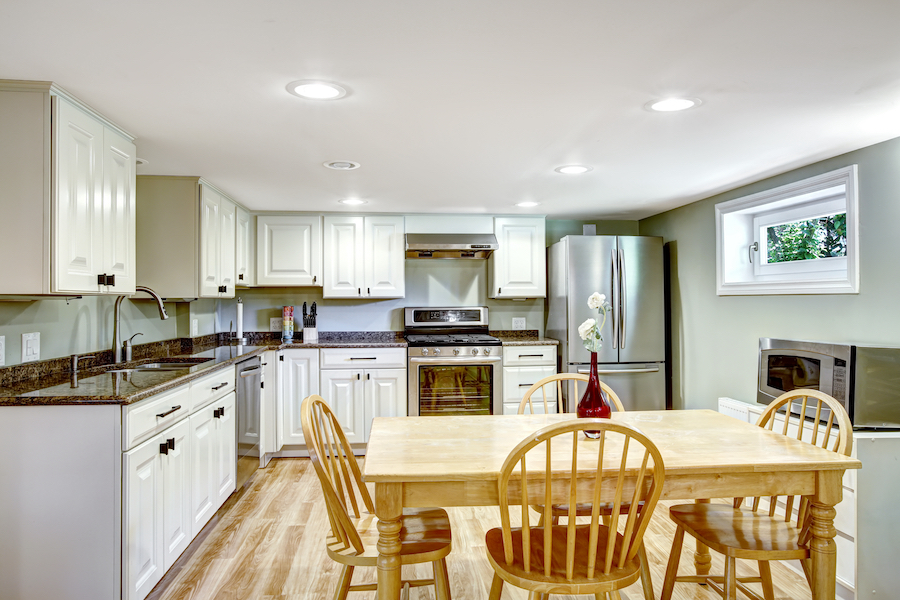
Basements often feel enclosed because they have lower ceilings and limited natural light. The goal is to visually expand the space wherever possible.
Use Light Colors & Warm Finishes
Light-colored walls, ceilings, and cabinetry help reflect available light and make the kitchen feel larger.
Good choices include:
- Soft whites
- Warm grays
- Pale greige tones
- Natural wood cabinetry
- Light quartz countertops
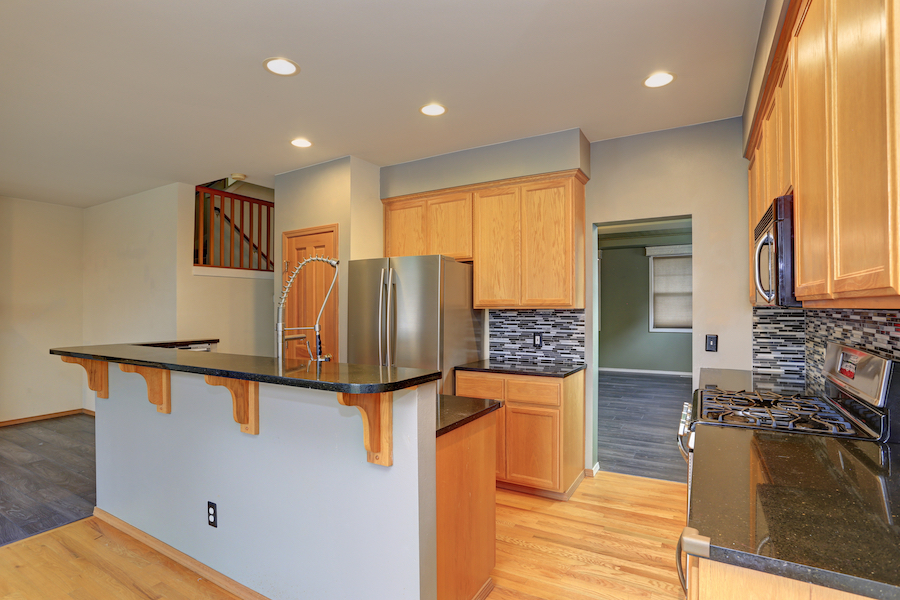
Natural wood finishes are especially effective because they help basements feel less cold and institutional.
Take Advantage of Any Windows
If the basement has windows—even small ones—make them central visual features.
- Avoid heavy window coverings
- Use sheer shades or light fabrics
- Place the sink near a window when possible
- Use reflective surfaces nearby to amplify natural light
Use Reflective Materials Carefully
Mirrors, glossy tile, stainless steel appliances, and glass shelving can visually expand the room by reflecting light.
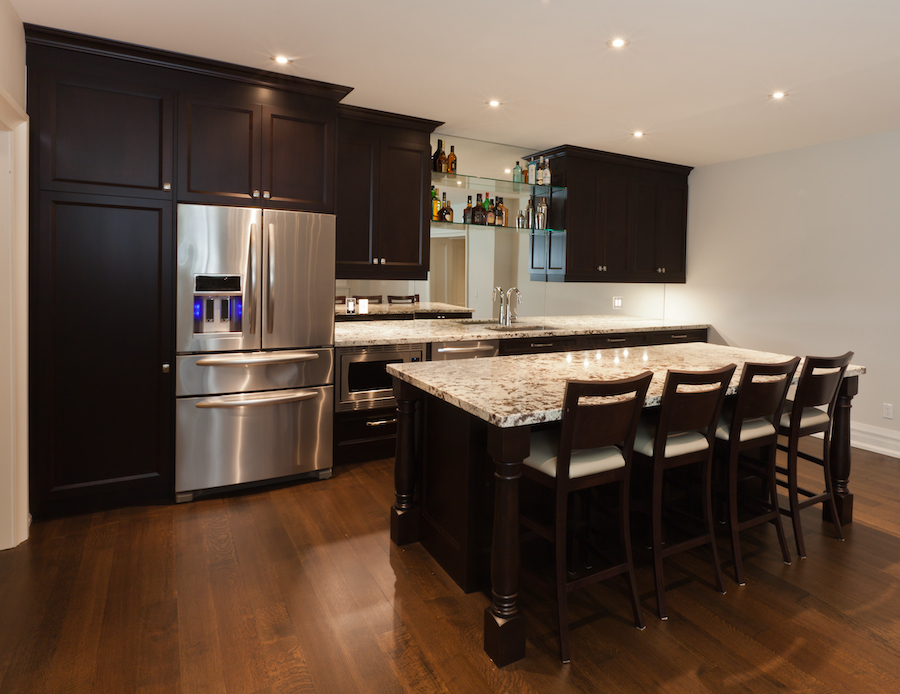
But avoid overusing glossy finishes, which can make the room feel harsh or overly commercial.
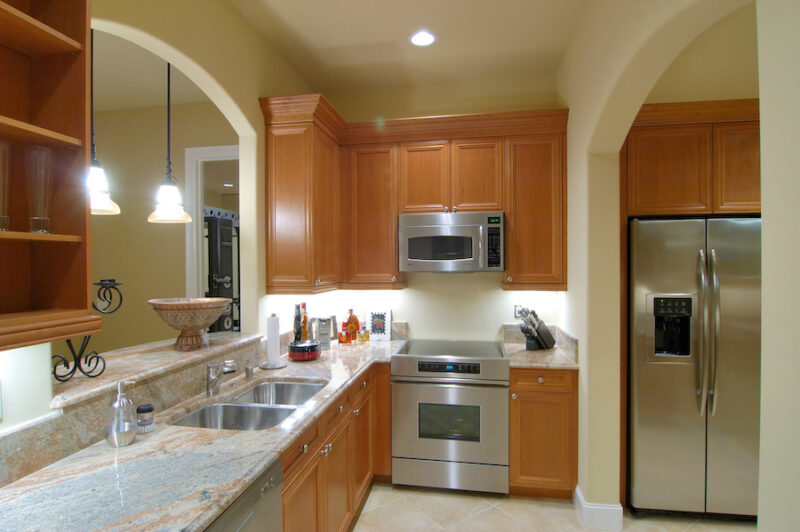
Reduce Visual Clutter
Basements often feel cramped when too many materials, colors, or exposed utilities compete visually.
To simplify the space:
- Box in exposed ductwork cleanly
- Use consistent cabinet finishes
- Minimize upper cabinets where possible
- Choose streamlined appliances
- Use open shelving selectively
Use Space Efficiently
Basement kitchens often require more creative storage planning than upstairs kitchens.
Choose Space-Saving Appliances
Compact appliances can dramatically improve functionality in smaller basement kitchens.
Popular options include:
- Apartment-size refrigerators
- Drawer refrigerators
- 18-inch dishwashers
- Combination microwave/hood units
- Induction cooktops
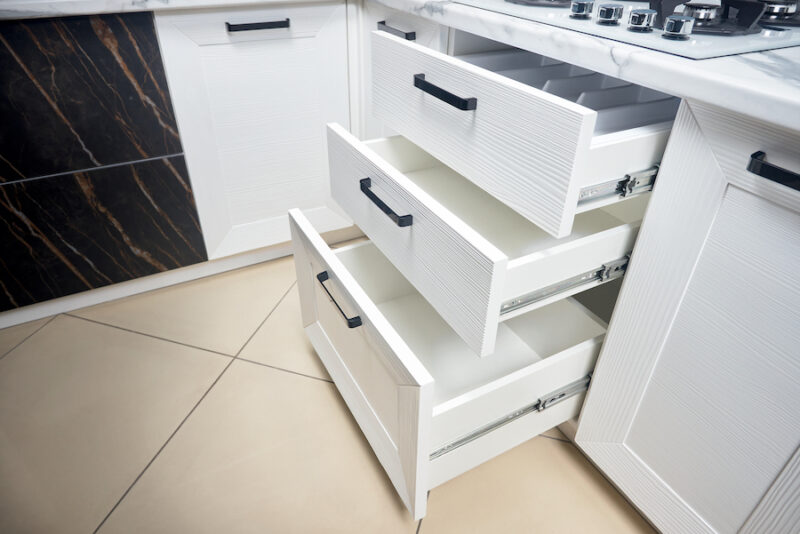
Use Multi-Functional Storage
Efficient storage is especially important in basements because square footage is often limited.
Helpful features include:
- Deep drawers on glides
- Pull-out pantry shelves
- Toe-kick drawers
- Corner storage systems
- Kitchen islands with storage
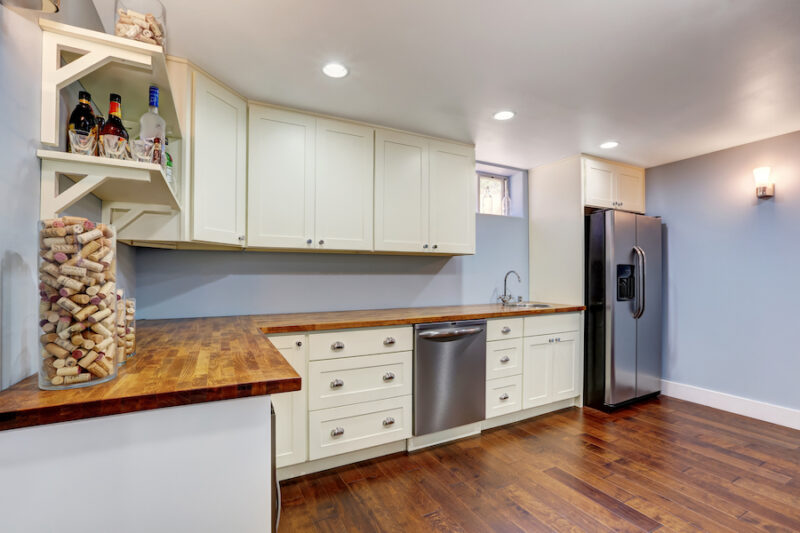
Use Vertical Space
Tall cabinetry draws the eye upward and maximizes storage capacity.
Open shelving can also help break up heavy cabinet walls and reduce the closed-in feeling common in basements.
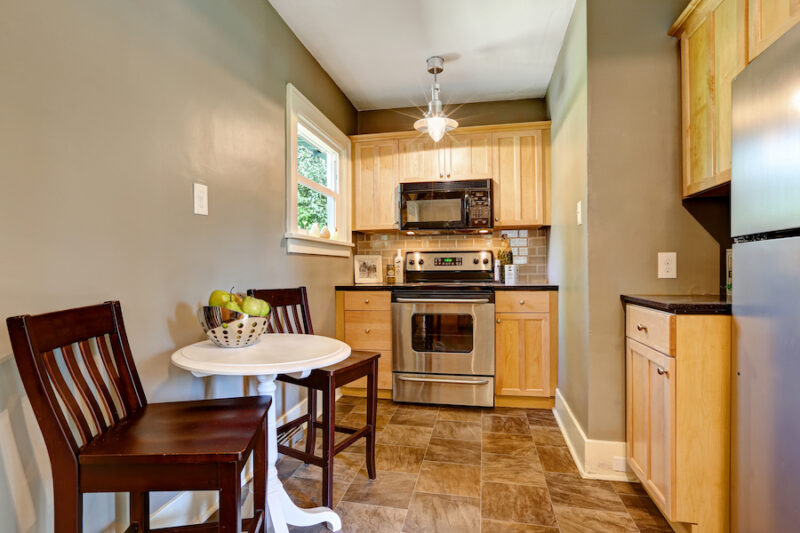
Consider Semi-Custom or Custom Cabinets
Many basements contain awkward alcoves, soffits, beams, or mechanical obstructions that standard cabinets handle poorly.
Custom or semi-custom cabinetry can maximize usable storage in difficult spaces.
Don’s Advice
One of the smartest upgrades in a basement kitchen is drawer-based lower cabinetry instead of traditional deep cabinets with doors.
In tight basement spaces, drawers make cookware and storage dramatically easier to access without crouching into dark cabinet interiors.
Solve Basement Lighting Challenges
Lighting is one of the most important elements in basement kitchen design.
Without enough light, even attractive kitchens can feel dark and confined.
Layer the Lighting
The best basement kitchens combine:
- Ambient lighting for overall brightness
- Task lighting for countertops and prep areas
- Accent lighting for warmth and visual depth
Use Recessed Lighting
Low-profile recessed lights work especially well in basements because they preserve headroom while providing broad illumination.
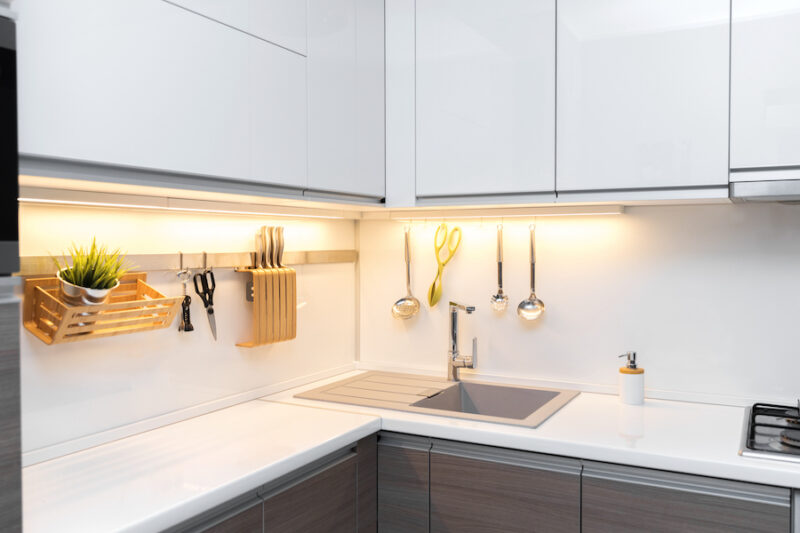
Add Under-Cabinet Lighting
LED strip lights or puck lights under cabinets brighten work surfaces and visually deepen the room.
Use Decorative Fixtures Carefully
Pendant lights can add warmth and personality, but avoid oversized fixtures that visually crowd low ceilings.
Prevent Moisture Problems
Moisture control is one of the most important aspects of any basement renovation.
Ignoring dampness can lead to:
- Musty odors
- Mold growth
- Cabinet damage
- Warped flooring
- Poor indoor air quality
Improve Drainage First
Before finishing a basement kitchen:
- Extend downspouts away from the foundation
- Improve exterior grading
- Repair foundation cracks
- Address water intrusion issues
See: Basement Waterproofing Solutions
Use Moisture-Resistant Materials
Good basement-friendly materials include:
- Luxury vinyl plank flooring
- Ceramic tile
- Mold-resistant drywall
- Quartz countertops
- Plywood cabinet boxes
Control Humidity
Most basements benefit from:
- Dehumidifiers
- Proper ventilation
- Range hoods vented outdoors
- HVAC balancing
Ventilation & Air Quality
Basement kitchens often suffer from stagnant air and poor circulation.
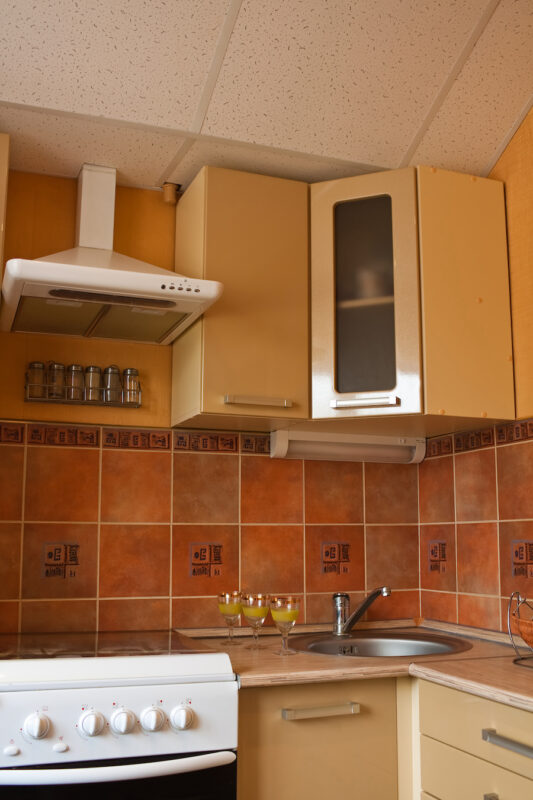
A properly vented range hood is one of the most important upgrades because it removes:
- Cooking moisture
- Grease particles
- Odors
- Combustion byproducts
Whenever possible, vent the hood outdoors rather than using a recirculating unit.
Basement Kitchen Costs
Costs vary widely depending on the size and complexity of the project.
- Simple kitchenette: $3,000–$10,000
- Mid-range basement kitchen: $10,000–$30,000
- Full custom basement kitchen: $30,000+
Major cost factors include:
- Plumbing access
- Electrical upgrades
- Cabinet quality
- Appliance selection
- Ventilation requirements
- Waterproofing work
FAQs
Can you legally install a kitchen in a basement?
Usually yes, but local building codes and zoning regulations vary. Rental units often have additional requirements.
What flooring works best in a basement kitchen?
Luxury vinyl plank, ceramic tile, and waterproof flooring materials generally perform best below grade.
Do basement kitchens need ventilation?
Yes. Proper ventilation helps control moisture, odors, and indoor air quality.
How do you make a basement kitchen brighter?
Use layered lighting, light-colored finishes, reflective surfaces, and open layouts to maximize brightness.
Is moisture a problem in basement kitchens?
It can be. Proper waterproofing, drainage, humidity control, and ventilation are essential.