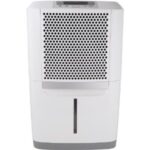
If your dehumidifier isn’t working, the problem is often something simple like a full bucket, dirty filter, frozen coils, or incorrect humidistat settings. Many common dehumidifier problems can be fixed in just a few minutes.

In This Article:
Quick Answer
Common Problems
How a Dehumidifier Works
Runs but No Water Collected
Won’t Turn On
Coils Freezing Up
Runs Constantly
Bad Odors or Musty Smells
When to Replace a Dehumidifier
FAQs
Dehumidifiers remove excess moisture from indoor air to help prevent:
- Mold growth
- Musty odors
- Condensation
- Dust mites
- Basement dampness
Most portable dehumidifiers work similarly to air conditioners.
A fan pulls humid air across cold evaporator coils where moisture condenses into water and drains into a collection bucket or hose.
When airflow, temperature, humidity, or drainage problems occur, the unit may stop removing moisture properly.
Quick Answer
If your dehumidifier isn’t working, empty the water bucket, clean the filter, check the humidistat setting, and make sure the room temperature is above about 60°F. If it still doesn’t remove moisture or won’t run, internal components may be faulty.

Don’s Advice
Many homeowners think a dehumidifier has failed when the real problem is simply low room temperature.
Most standard compressor-style dehumidifiers stop working efficiently when temperatures fall below about 60°F because frost forms on the coils.
Common Dehumidifier Problems & Fixes
| Problem | Likely Cause | Typical Fix |
|---|---|---|
| Runs but no water | Low humidity or restricted airflow | Clean filter and check settings |
| Won’t turn on | Full bucket or power issue | Check outlet and bucket position |
| Shuts off quickly | Humidistat set too low | Raise humidity setting |
| Coils freeze up | Room too cold | Raise room temperature |
| Runs constantly | Oversized moisture load | Check for leaks or ventilation issues |
| Musty smell | Mold or dirty filter | Clean bucket and filter |
How a Dehumidifier Works
A portable dehumidifier contains:
- A fan
- Cold evaporator coils
- Warm condenser coils
- A compressor
- A humidistat
- A water collection bucket
The humidistat is the control that senses room humidity and turns the machine on or off automatically.
As humid air passes over the cold evaporator coils:
- Moisture condenses into water droplets
- Water drips into the collection bucket
- Drier air passes back into the room
If airflow is blocked or the coils become too cold, performance drops sharply.
Dehumidifier Runs but No Water Collected
If the fan runs but little or no water collects, the unit may not actually need to remove moisture—or airflow may be restricted.
1. Check the Room Humidity
If indoor humidity is already fairly low, the unit may run only briefly or collect very little water.
Use a hygrometer if possible.
Most dehumidifiers work best when indoor humidity is above about 50%.
2. Clean the Air Filter
A dirty air filter restricts airflow across the coils.
Locate the filter behind the intake grille and remove it carefully.
Depending on the model:
- Vacuum the filter gently
- Wash it with mild soap and water
- Allow it to dry completely before reinstalling
Never operate the dehumidifier without the filter installed.
3. Inspect the Coils
Unplug the unit and inspect the evaporator coils for:
- Dirt buildup
- Lint
- Dust
- Ice formation
Dirty coils reduce moisture removal efficiency significantly.
Clean lightly using:
- A soft brush
- Vacuum attachment
- Compressed air if recommended by the manufacturer
4. Check the Room Temperature
Most standard dehumidifiers do not operate efficiently below about 60°F.
At lower temperatures:
- Coils may freeze
- Moisture removal drops sharply
- The compressor may cycle improperly
If used in a cool basement, consider:
- Raising room temperature slightly
- Using a low-temperature dehumidifier model
5. Verify Airflow Around the Unit
Make sure the unit has open airflow space around it.
Do not place it tightly against walls or furniture.
Most manufacturers recommend at least:
- 6 to 12 inches of clearance
around intake and discharge vents.
Dehumidifier Won’t Turn On
If the unit will not start at all, begin with simple checks before assuming major failure.
1. Check the Power Supply
Verify that:
- The unit is plugged in fully
- The outlet has power
- The breaker has not tripped
Test the outlet using another appliance or lamp.
2. Empty the Water Bucket
Most dehumidifiers have a safety switch that prevents operation when the bucket is full.
Even a partially misaligned bucket can stop the unit from starting.
Remove the bucket completely and reinstall it carefully.
Make sure it slides fully into position.
3. Check the Bucket Safety Switch
The bucket usually presses against a small safety switch or float mechanism.
If this switch sticks or fails, the unit may think the bucket is full even when empty.
Inspect for:
- Broken float arms
- Debris
- Misalignment
4. Raise the Humidistat Setting
If the humidity setting is too low, the unit may believe the room is already dry enough.
Set the humidistat higher temporarily to trigger operation.
For testing:
- Set humidity around 60%
If the compressor starts, the humidistat setting was likely the issue.
5. Listen for Compressor or Fan Activity
If the fan runs but the compressor never starts:
- The compressor relay may be faulty
- The start capacitor may have failed
- Refrigerant problems may exist
These repairs often require professional service.
Dehumidifier Coils Freezing Up
If frost or ice forms on the coils, the unit is operating in conditions that are too cold or airflow is restricted.
1. Turn Off the Unit
Allow all ice to melt completely before restarting.
Running the unit while frozen can damage the compressor.
2. Clean the Filter and Coils
Poor airflow commonly contributes to freezing.
Clean:
- The air filter
- Intake grille
- Evaporator coils
3. Increase the Room Temperature
Most compressor-style units work poorly in cold basements or crawlspaces.
Raise room temperature if possible.
Some newer models include:
- Automatic defrost cycles
- Low-temperature operation modes
Older units may not.
Don’s Advice
If coils repeatedly freeze even in a warm room, the problem may be low refrigerant or a sealed-system failure.
Those repairs are usually not economical on older portable dehumidifiers—you’re usually better off buying a new one.
Dehumidifier Runs Constantly
If the unit rarely shuts off, the room may have an unusually high moisture load.
Possible Causes Include:
- Basement water seepage
- Poor ventilation
- Uncovered crawlspace soil
- Drying laundry indoors
- Open windows
- Humid outdoor air infiltration
Check for Oversized Moisture Problems
If the unit runs nonstop but humidity remains high, investigate:
- Foundation leaks
- Drainage problems
- Condensation issues
- HVAC ventilation problems
Related article:
How to Reduce Humidity in a House
Dehumidifier Has a Musty Smell
Musty odors usually mean mold or mildew is growing inside the unit.
1. Clean the Bucket
Standing water can quickly develop odor-causing growth.
Wash the bucket using:
- Mild detergent
- White vinegar solution
- Diluted bleach solution if allowed by the manufacturer
2. Clean the Filter
Dirty filters commonly trap:
- Dust
- Mold spores
- Pet hair
- Moisture
3. Inspect the Drain Hose
If the unit uses continuous drainage, inspect the hose for slime or blockage.
Flush the hose thoroughly if needed.
When to Replace a Dehumidifier
Consider replacing the unit if:
- The compressor no longer runs
- Coils freeze repeatedly
- The sealed refrigeration system leaks
- The unit is heavily corroded
- Repairs approach replacement cost
- The unit is more than 8 to 10 years old
Modern Energy Star® dehumidifiers are often quieter and significantly more efficient than older models.
Need Professional Help?
If the dehumidifier has compressor problems, refrigerant leaks, or electrical issues, an HVAC technician or appliance repair specialist may be needed.
Find a trusted HVAC professional for dehumidifier or humidity-control repairs.
FAQs
Why is my dehumidifier running but not collecting water?
Low humidity, dirty filters, frozen coils, or poor airflow are the most common causes.
What temperature is too low for a dehumidifier?
Most standard compressor models struggle below about 60°F.
Why does my dehumidifier keep shutting off?
The humidistat setting may be too low, the bucket may be full, or the coils may be freezing.
How do I know if my dehumidifier is broken?
If it has power but still does not remove moisture after cleaning and troubleshooting, internal components may have failed.
Can a dirty filter stop a dehumidifier from working?
Yes. Restricted airflow greatly reduces moisture removal performance.
Should a dehumidifier run constantly?
No. Continuous operation usually indicates excessive moisture or an undersized unit.