Expert illustrated guide to house foundation types, including slab foundations, crawl spaces, concrete block foundations, pier-and-beam systems, and how foundations support and protect a home.

In This Article:
Quick Answer
What a Foundation Does
What Is a Footing?
Slab Foundations
Raised Perimeter Foundations
Concrete Block Foundations
Pier-and-Footing Foundations
Common Foundation Problems
Foundation Repair Basics
FAQs
A house foundation supports the enormous weight of the structure while keeping it stable, level, and protected from moisture and ground movement.
Without a properly designed foundation, a house can suffer from:
- Settling
- Cracked walls
- Uneven floors
- Moisture damage
- Structural movement
- Termite problems
Most modern residential foundations are made from reinforced concrete, though older homes may have foundations built from:
- Stone
- Brick
- Concrete block
- Preservative-treated wood
The most common modern foundation types include:
- Concrete slab foundations
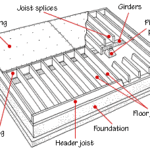
- Raised perimeter foundations with crawl spaces
- Concrete block foundations
- Pier-and-beam systems
Some homes combine several foundation types depending on the layout and site conditions.
Quick Answer
A house foundation transfers the weight of the structure safely into the soil while protecting the home from movement, moisture, and structural damage. The most common residential foundation types are slab foundations, raised perimeter foundations, concrete block foundations, and pier-and-beam systems.

Don’s Advice
One of the most important things homeowners should understand is that foundations are designed specifically for local soil and climate conditions.
A foundation system that works perfectly in one region may perform poorly in another because of differences in frost depth, expansive clay soils, drainage conditions, or earthquake risk.
What a Foundation Does
A foundation serves several critical structural purposes.
It:
- Supports the weight of the house
- Distributes loads into the soil
- Creates a level construction base
- Separates wood framing from ground moisture
- Helps resist settling and movement
- Protects against frost heave in cold climates
In many homes, the foundation also supports:
- Basement walls
- Crawl spaces
- Garage slabs
- Interior load-bearing beams
The type of foundation used depends on:
- Climate
- Soil conditions
- Topography
- Construction methods
- Local building codes
- Budget
What Is a Footing?
The bottom portion of a foundation is called the footing (sometimes called the footer).
The footing spreads the house’s weight over a wider area of soil to help prevent:
- Settling
- Shifting
- Cracking
- Structural movement
Footings are usually:
- Wider than the foundation wall
- Made from reinforced concrete
- Installed below frost depth
In colder climates, footings must extend below the frost line so freezing soil does not lift or damage the foundation.
Don’s Advice
Poor drainage around a house is one of the leading causes of foundation movement and cracking.
Even a properly built foundation can develop problems if water repeatedly soaks the soil around it.
Concrete Slab Foundations
A slab foundation is a thick concrete pad poured directly on prepared soil.

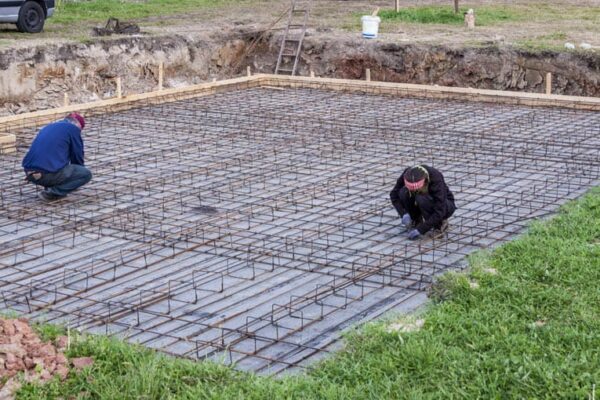
The slab serves as both:
- The structural foundation
- The home’s ground-floor surface
Slab foundations are especially common in:
- Warm climates
- Areas without deep frost
- Modern tract housing
Monolithic Slabs
In some homes, the footing and slab are poured as one integrated unit called a monolithic slab.
This approach can simplify construction and reduce costs.
Advantages of Slab Foundations
- Lower construction cost
- Minimal crawl-space moisture issues
- Reduced termite access points
- Fast construction
Potential Drawbacks
- Difficult plumbing repairs beneath slab
- Harder remodeling access
- Can crack if soil shifts
- Less insulation separation from ground
Raised Perimeter Foundations
Raised perimeter foundations are among the most common foundation systems in many parts of the United States.
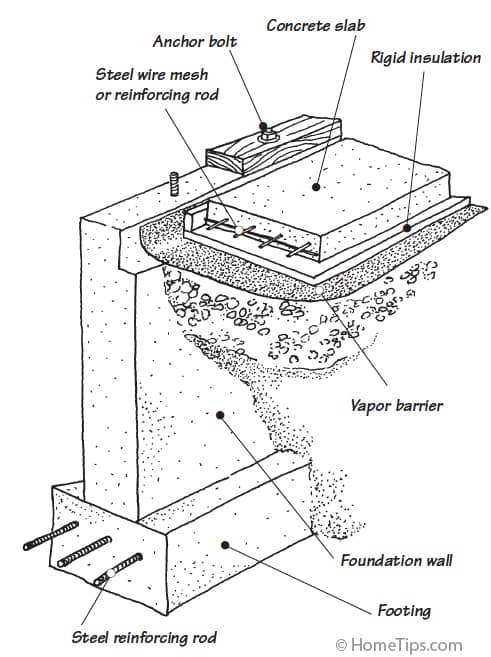
These foundations use:
- Concrete perimeter walls
- Concrete footings
- Crawl-space framing
The floor framing is elevated above the ground, creating a crawl space beneath the home.
Why Crawl Spaces Are Useful
Crawl spaces allow easier access to:
- Plumbing
- Electrical wiring
- Ductwork
- Structural framing
This can make repairs and remodeling easier than with slab construction.
Raised Foundations & Moisture
Because crawl spaces can trap moisture, proper ventilation and drainage are critical.
Poor crawl-space moisture control can contribute to:
- Wood rot
- Mold growth
- Termite problems
- Floor sagging
See also:
Crawl Space Moisture Control
How to Diagnose Foundation Problems
Concrete Block Foundations
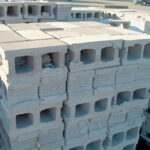
Concrete block foundations use hollow concrete masonry units (CMUs) stacked on reinforced concrete footings.
Steel reinforcing bars and grout are commonly added to strengthen the walls.
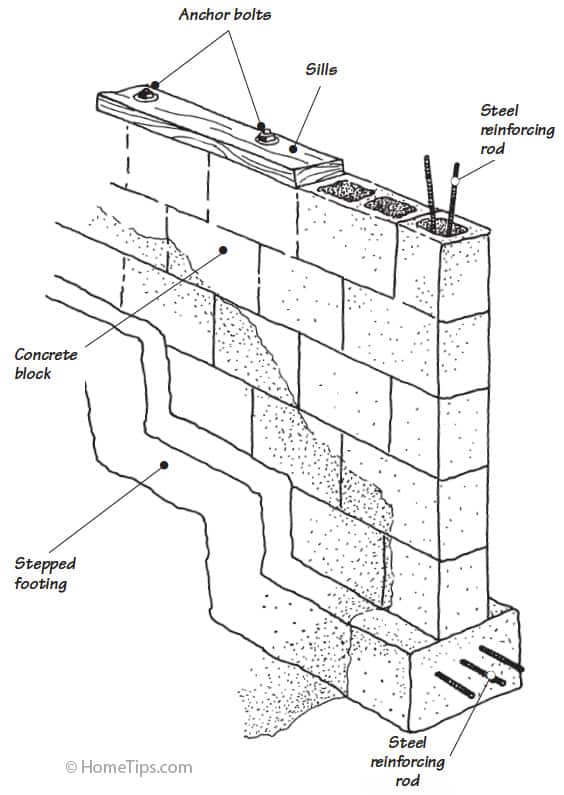
Advantages of Concrete Block Foundations
- Less expensive than some poured foundations
- Flexible for certain site conditions
- Common for basements and crawl spaces
Potential Drawbacks
- More susceptible to moisture penetration
- Mortar joints can crack over time
- May bow under soil pressure if poorly reinforced
Concrete block foundations are especially common in older homes.
Pier-and-Footing Foundations
Pier-and-footing foundations support the house using a series of individual piers resting on concrete footings.
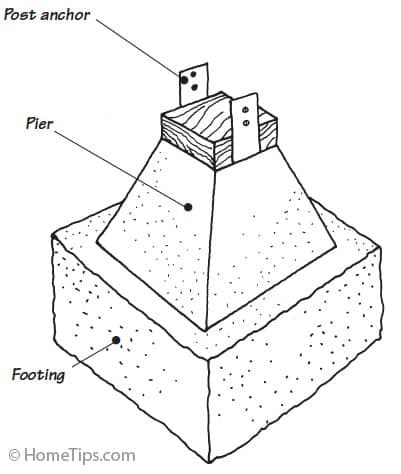
Concrete pier and footing foundation detail. © Don Vandervort, HomeTips
These systems were widely used in older homes and are still common in:
- Cabins
- Vacation homes
- Hillside construction
- Flood-prone areas
How Pier Foundations Work
The piers support beams and floor framing above the ground.
This creates open air space beneath the structure.
Advantages
- Good ventilation beneath floors
- Useful on uneven terrain
- Reduced excavation
Potential Drawbacks
- More movement and vibration
- Less rigidity than perimeter foundations
- Exposed plumbing and insulation challenges
Modern homes more commonly use engineered perimeter systems for improved structural stability.
Common Foundation Problems
Foundation problems are often caused by:
- Soil movement
- Poor drainage
- Expansive clay soils
- Tree roots
- Poor compaction
- Water intrusion
Common warning signs include:
- Foundation cracks
- Uneven floors
- Doors that stick
- Wall cracks
- Separated trim
- Moisture problems
Not all cracks indicate serious structural failure. Small shrinkage cracks in concrete are common.
See also:
How to Diagnose Foundation Problems
Foundation Crack Repair
Foundation Repair Basics
Foundation repairs vary widely depending on the cause and severity of the problem.
Repairs may involve:
- Drainage improvements
- Crack repair
- Underpinning
- Pier installation
- Soil stabilization
- Structural reinforcement
Many foundation problems are worsened by uncontrolled water around the home.
Maintaining gutters, grading, and drainage can help prevent future movement.
Need Professional Help?
If you notice major foundation cracks, uneven floors, wall movement, or recurring moisture problems, it’s wise to have the home evaluated by a qualified structural or foundation professional.
Find a trusted local foundation contractor for inspections and repair estimates.
FAQs
What is the best type of house foundation?
The best foundation depends on climate, soil conditions, drainage, and the design of the home.
What is the difference between a slab foundation and a crawl space?
A slab foundation rests directly on the ground, while a crawl-space foundation raises the floor framing above the soil.
Are foundation cracks normal?
Small concrete shrinkage cracks are common. Large, widening, or displaced cracks may indicate structural movement.
Why are footings installed below frost depth?
Footings below the frost line help prevent freezing soil from lifting or shifting the foundation.
What causes foundation settling?
Common causes include soil movement, poor drainage, inadequate compaction, expansive clay soils, and water intrusion.