Plumbing vent problems can cause slow drains, gurgling sounds, and even sewer odors by preventing proper airflow in your drain system. Most vent issues are caused by blockages such as debris, nests, or ice.

In This Article:
Quick Answer
How Vents Work
Common Signs
Common Causes
How to Check
Vent vs Sewer Problem
When to Call a Plumber
Most homeowners know that drain pipes carry wastewater away from sinks, toilets, and showers. But fewer people realize that every plumbing system also depends on vent pipes that allow air to enter the system.
Without proper airflow, water cannot move freely through the pipes. This can lead to slow drains, toilet gurgling or sink gurgling when the toilet flushes, and pressure problems that affect multiple parts of your home.
Understanding how vent problems work can help you identify issues early—before they turn into major drain or sewer problems.
Quick Answer
A plumbing vent allows air into the drain system so wastewater can flow properly. If the vent is blocked, fixtures may drain slowly, toilets may gurgle, and water can be siphoned out of traps.
Bottom Line: If your plumbing system can’t pull in air through vents, it will pull it through your fixtures instead—causing gurgling, slow drainage, and potential sewer gas problems.
How Plumbing Vents Work
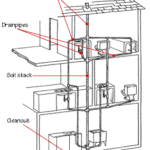
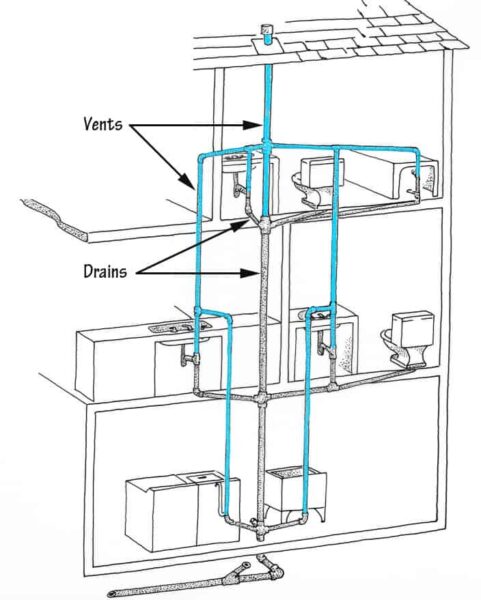
Plumbing systems rely on a drain-waste-vent (DWV) system.
While drain pipes carry wastewater away, vent pipes extend upward through the roof to allow air into the system. This airflow prevents suction from forming inside the pipes.
Without proper venting:
- Water flow slows down
- Air pressure becomes unbalanced
- Water can be pulled out of traps
- Sewer gases can enter the home

Common Signs of a Vent Problem
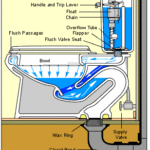
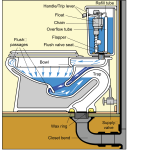
- Toilet gurgles when flushed
- Sink gurgles when toilet flushes
- Toilet bubbles when shower runs
- Slow draining sinks, tubs, or showers
- Water levels change unexpectedly in fixtures
- Sewer odors from drains
If several of these symptoms occur at the same time, the problem is often related to the vent system
If multiple fixtures are slow or backing up, the issue may be more serious—see main drain clog symptoms.
Common Causes of Vent Blockages
Leaves and debris
Wind can carry leaves and dirt into the open vent pipe.
Bird nests or animals
Birds and small animals sometimes build nests inside vent openings.
Snow or ice
In colder climates, ice can temporarily block the top of a vent pipe.
Pipe damage
Older plumbing systems may have damaged or partially collapsed vent pipes.
How to Check for a Vent Blockage
1. Listen for gurgling
Flush a toilet and listen for bubbling or gurgling in nearby fixtures.
2. Check multiple fixtures
If more than one drain is slow or noisy, the issue may involve the vent system.
3. Inspect the roof vent
If it is safe, look at the vent opening on the roof for visible debris.
- Leaves
- Sticks
- Nests
- Ice buildup
4. Clear visible debris
Remove any accessible debris. In some cases, flushing the vent with a hose may help.
Safety Note
Accessing a roof can be dangerous. If conditions are unsafe, call a professional.
Vent Problem vs Sewer Line Problem
Vent problems and sewer line blockages can cause similar symptoms.
Likely vent problem:
- Gurgling without backups
- Air-related sounds
Likely sewer problem:
- Water backing up into fixtures
- Multiple drains clogged
- Recurring toilet clogs
See Sewer Line Blockages.
When to Call a Plumber
- Multiple fixtures are affected
- Sewer odors are present
- Vent pipes cannot be safely inspected
- The cause is unclear
Plumbers may use specialized tools such as drain cameras to diagnose the issue. To confirm whether the problem is vent-related or deeper in the system, a sewer camera inspection may be necessary.
If needed, you can find a qualified plumber.
For hiring advice, see Trade Secrets for Hiring the Right Plumber.