Removing a door is usually easier than most homeowners expect, but heavy doors, painted hinge pins, and tight clearances can make the job awkward if you aren’t prepared. Here’s how to remove a door safely without damaging the hinges, jamb, or flooring.

Quick Answer
Why You Might Need to Remove a Door
Tools You’ll Need
Prepare the Area
How to Remove Hinge Pins
Lift the Door Off
How to Remove Stuck Hinge Pins
Removing Heavy or Exterior Doors
How to Reinstall the Door
FAQs
Doors are commonly removed for:
- Painting or refinishing
- Planing or trimming
- Replacing hinges
- Repairing sagging or sticking doors
- Installing flooring or carpet
- Moving large furniture
Most interior hinged doors can be removed in just a few minutes once the hinge pins are accessible.
The biggest challenge is usually supporting the weight of the door safely while removing the pins.
Quick Answer
To remove a standard hinged door:
- Open the door slightly
- Support the bottom of the door
- Tap out the hinge pins from bottom to top
- Lift the door free from the hinges
Interior hollow-core doors are usually manageable for one person, but heavy solid-core or exterior doors often require a helper.

Don’s Advice
Many homeowners underestimate how heavy a door can become once the hinge pins start coming out.
Even a standard solid-core interior door can shift suddenly and damage flooring or pinch fingers if it isn’t supported properly.
Why You Might Need to Remove a Door
Removing the door completely often makes repairs easier and safer.
For example, many repairs are difficult while the door remains hanging:
- Planing or sanding edges
- Painting evenly
- Repairing hinge damage
- Fixing warped or swollen doors
- Installing weatherstripping
Removing the door also allows better access when:
- Replacing flooring
- Moving appliances or furniture
- Repairing jamb damage
Tools You’ll Need
Most doors can be removed with only basic hand tools.
Common tools include:
- Hammer
- Nail set or small punch
- Flat screwdriver
- Wood shims
- Pry bar (optional)
For stuck or painted hinges, you may also need:
- Utility knife
- Penetrating oil
- Pliers
Prepare the Area First
Before removing the door:
- Clear nearby furniture or obstacles
- Protect delicate flooring if needed
- Have a safe place ready to set the door
A pair of sawhorses works especially well for supporting the door afterward.
Open the Door Slightly
Most doors are easiest to remove when opened slightly—typically about 30 to 45 degrees.
This position reduces pressure on the hinge pins and makes removal easier.
Support the Bottom of the Door
Place:
- Wood shims
- A pry bar
- A wood block
…beneath the bottom edge of the door to support its weight.
This becomes especially important before removing the final hinge pin.
How to Remove Door Hinge Pins
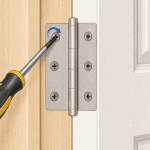
Most residential interior doors use removable hinge pins.
The hinge pin is the long metal rod (like a bolt without threads) running vertically through the hinge knuckles.
1. Start With the Bottom Hinge
Beginning at the bottom hinge helps stabilize the door longer while you work.
Place a nail set, punch, or small screwdriver against the underside of the hinge pin.
Then tap upward gently with a hammer.
Once the pin lifts slightly:
- Pull it upward by hand
- Or grip it with pliers
2. Remove the Middle Hinge Pin
Repeat the process on the middle hinge if present.
The door may begin shifting slightly as more weight transfers to the remaining hinge.
3. Remove the Top Hinge Pin Last
Support the door carefully while removing the final pin.
At this point the door is no longer secured and can tip unexpectedly. It’s a good idea to have a helper ready to support the door during this step.
How to Lift the Door Off the Hinges
Once all hinge pins are removed:
- Grip both sides of the door firmly
- Lift straight upward and pull horizontally to separate the hinge leaves
- Carry the door carefully to a protected work area
Avoid dragging the bottom edge across flooring.
Even lightweight hollow-core doors can damage wood floors if dragged carelessly.
Don’s Advice
If the door feels unusually heavy or awkward, don’t try to muscle it alone.
Exterior doors and solid-core doors can easily weigh over 80 to 100 pounds.
How to Remove Stuck or Painted Hinge Pins
Older doors often develop hinge pins that stick because of:
- Paint buildup
- Corrosion
- Dirt accumulation
- Minor hinge deformation
Cut Paint Seals First
If paint bridges the hinge leaves or pin head:
- Use a utility knife carefully
- Score around the pin and hinge edges
This helps prevent paint from tearing away from the trim or door surface.
Use Penetrating Oil
Apply a small amount of penetrating oil around the hinge pin and allow it to soak briefly.
Then tap the pin upward again.
Tap Gently and Repeatedly
Avoid striking the hinge aggressively.
Excessive force can:
- Bend hinge leaves
- Damage trim
- Dent painted surfaces
Patience usually works better than force.
Removing Heavy or Exterior Doors
Exterior doors and solid-core doors often require extra care.
These doors may include:
- Weatherstripping resistance
- Security hinges
- Closer hardware
- Heavy insulated cores
Some exterior hinges use:
- Non-removable pins
- Set screws
- Security tabs
Inspect the hinges carefully before attempting removal.
Have a Helper Assist
For heavy or glazed doors:
- One person should stabilize the door
- The other should remove the pins
This greatly reduces the risk of injury or damage.
How to Reinstall the Door
To reinstall the door:
- Set the door back into position
- Align the hinge leaves carefully
- Insert the top hinge pin first and tap it down
- Install the remaining pins
Sometimes gently wiggling the door helps align the hinges properly.
If the pins resist insertion:
- Check hinge alignment carefully
- Avoid hammering excessively
Once installed:
- Open and close the door several times
- Check for rubbing or sticking
- Verify the latch operates properly
See also:
How to Fix a Sticking Door
How to Fix a Sagging Door
Need Professional Help?
If the door is unusually heavy, warped, or difficult to align properly, a carpenter or door specialist can help prevent damage to the hinges or frame.
FAQs
Can I remove a door by myself?
Most lightweight interior hollow-core doors can be removed by one person, but removing a heavier door is safer with two people.
Why won’t my hinge pin come out?
Paint buildup, corrosion, or dirt may be binding the pin inside the hinge. Also, some hinge pins are permanently fixed.
Should I remove the top hinge pin first?
Usually no. Starting at the bottom helps keep the door stable longer.
How heavy is a typical interior door?
Light hollow-core doors may weigh 25 to 40 pounds, while solid-core doors can exceed 70 pounds.
Can removing a door damage the hinges?
Not if the door is supported properly and the pins are removed carefully.