
Expert illustrated advice on how to clean rain gutters safely and effectively, including DIY gutter cleaning techniques, leaf blower methods, maintenance tips, and when to hire a gutter cleaning service.
In This Article:
Quick Answer
How Much Gutter Cleaning Costs
Should You Clean Gutters Yourself?
Best Gutter Cleaning Tools
Step-by-Step Gutter Cleaning
Using a Leaf Blower to Clean Gutters
Gutter Maintenance Tips
FAQs
Gutters are one of a home’s most important water-management systems. During rainstorms, they collect runoff from the roof and channel it safely away from siding, windows, doors, landscaping, and foundations.
But gutters only work properly when they stay clear.
Leaves, pine needles, roof grit, twigs, and debris can clog gutters and downspouts, causing water to overflow or back up beneath roofing. Overflowing gutters can eventually lead to:
- Foundation problems
- Rotting fascia boards
- Roof-edge damage
- Landscape erosion
- Basement moisture problems
- Ice dams in cold climates
Routine gutter cleaning is one of the simplest ways to prevent expensive water damage around a home.
See also: How to Buy Gutter Guards & Leaf Catchers
Falls from ladders are one of the most common causes of homeowner injuries. If your roof is steep, high, slippery, or difficult to access safely, hire a professional gutter cleaning service instead of attempting the work yourself.
Quick Answer
To clean gutters safely, remove loose debris by hand or with a scoop, flush gutters and downspouts thoroughly with water, and clear any clogs from drainpipes. Most homes need gutter cleaning at least twice a year—more often if trees overhang the roof.

Don’s Advice
One of the biggest gutter-cleaning mistakes homeowners make is waiting until gutters are overflowing badly before cleaning them.
By that point, trapped moisture may already be damaging fascia boards, roof edges, or siding behind the gutters.
How Much Does Gutter Cleaning Cost?
The easiest and safest way to clean gutters is often hiring a professional gutter cleaning service.
Current typical pricing for professional gutter cleaning generally ranges from:
- $125 to $350+ for most homes
Factors that affect pricing include:
- Home height
- Roof pitch
- Linear feet of gutter
- Tree coverage
- Difficulty of access
- Amount of debris
- Presence of gutter guards
Tall homes, steep roofs, and heavy pine-needle buildup usually increase the price substantially.
Many companies estimate pricing by linear foot, so measuring the approximate perimeter of the house can help estimate costs.
If gutter guards are installed, ask whether removal and reinstallation are included in the estimate.
Don’s Advice
Very inexpensive gutter-cleaning bids sometimes mean the company is rushing through the work quickly without thoroughly flushing downspouts or inspecting for problems.
A good cleaning service should also identify loose gutters, leaks, damaged fasteners, and drainage problems while they are up there.
Should You Clean Gutters Yourself?
DIY gutter cleaning can save money, but it only makes sense if you can work safely from a ladder or roof.
Professional cleaning is often the smarter and safer choice for:
- Steep roofs
- 2-story or taller homes
- Slippery roofing
- Difficult access
- Wet conditions
Never work on a roof or ladder during:
- Rain
- High wind
- Icy conditions
- Extreme heat
See also: Ladder Safety Guide


Best Gutter Cleaning Tools
Basic gutter-cleaning tools include:
- Heavy work gloves
- Safety glasses or goggles
- Garden trowel or gutter scoop
- Bucket or debris bag
- Garden hose with spray nozzle
- Extension ladder or stepladder
- Plumber’s snake for clogged downspouts
Useful optional tools include:
- Leaf blower gutter-cleaning kit
- Ladder stabilizer
- Wet/dry vacuum attachments
- Telescoping gutter-cleaning tools
Wear gloves because gutters often contain:
- Sharp metal edges
- Sheet-metal screws with very sharp points
- Broken twigs
- Grit and bacteria-filled debris

How to Clean Gutters Step-by-Step
1. Remove Roof Debris First
If it is safe to do so, remove loose leaves and debris from the roof before cleaning the gutters.
Otherwise, the next rainstorm may immediately refill the gutters.
Only walk on roofs that are:
- Low slope
- Dry
- Safe to access
Never work near overhead power lines.
2. Scoop Out Loose Debris
Starting near a downspout outlet, scoop leaves and debris from the gutter using a gutter scoop or narrow garden trowel.
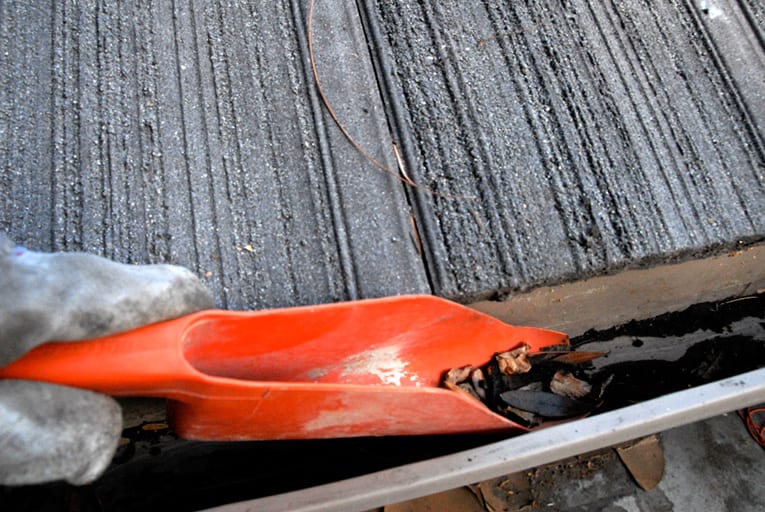
Slightly damp debris is often easier to remove than completely dry or soggy material.
Place debris into:
- A bucket
- Heavy trash bags
- A tarp below
3. Flush Gutters with Water
Use a garden hose with a spray nozzle to flush remaining debris toward the downspouts.
Flushing also helps identify:
- Leaks
- Improper slope
- Standing water
- Loose joints
- Overflow problems
4. Clear Downspout Clogs
If water backs up, the downspout is likely clogged.
Try flushing the downspout first with a hose.
If that doesn’t work, use:
- A plumber’s snake
- A drain auger
- A pressure nozzle
5. Inspect the Gutters Carefully
After cleaning, inspect for:
- Loose fasteners
- Sagging gutters
- Leaks at joints
- Rust
- Separated downspouts
- Rotting fascia boards
See also: How to Repair Gutters & Downspouts
Using a Leaf Blower to Clean Gutters
Leaf blowers can work well for cleaning dry leaves and debris from gutters.
The safest method is using a gutter-cleaning attachment that allows you to work from the ground.

This method works best when:
- Leaves are dry
- Gutters are not packed solid
- The home is single-story or low-level
Wear:
- Eye protection
- Old clothes
- Hearing protection if needed
Avoid Roof-Blowing Methods
Some homeowners blow gutters out while standing on the roof, but this can be very dangerous because it involves walking along the edges of the roof. Saving a few bucks otherwise spent on a gutter cleaning service isn’t worth a devastating or fatal fall.
Never attempt this on:
- Steep roofs
- Wet roofs
- High roofs
- Metal roofs
Professional roofers use specialized fall-protection systems that most homeowners do not have.
How to Maintain Rain Gutters
Most homes benefit from gutter inspections at least twice per year:
- Spring
- Late fall
Homes beneath pine trees or heavy tree cover may need more frequent cleaning.
Maintenance should include:
- Checking gutter slope
- Inspecting downspouts
- Looking for leaks
- Checking fasteners
- Removing roof debris
- Inspecting splash blocks and drainage
Gutters should slope slightly toward downspouts so water drains properly.
Also make sure downspouts discharge water well away from the foundation.
See also:
How to Fix Gutters & Downspouts
Downspout Drainage Solutions
Need Professional Help?
Professional gutter cleaning services have specialized ladders, safety equipment, and tools that allow them to clean and inspect gutters safely—especially on tall or steep homes.
Find a trusted local gutter contractor for gutter cleaning and repairs.
FAQs
How often should gutters be cleaned?
Most homes need gutter cleaning at least twice per year. Homes under heavy tree cover may require more frequent cleaning.
Can clogged gutters damage a house?
Yes. Overflowing gutters can contribute to foundation problems, wood rot, siding damage, and basement moisture issues.
What is the safest way to clean gutters?
Working from a stable ladder or using ground-based gutter-cleaning tools is usually safest. Very tall or steep roofs are often best left to professionals.
Are gutter guards worth it?
Many gutter guards reduce maintenance significantly, but no system completely eliminates the need for occasional inspection and cleaning.
Can you pressure wash gutters?
Yes, but excessive pressure can damage gutters or force water behind roofing and siding.